Artist Statement
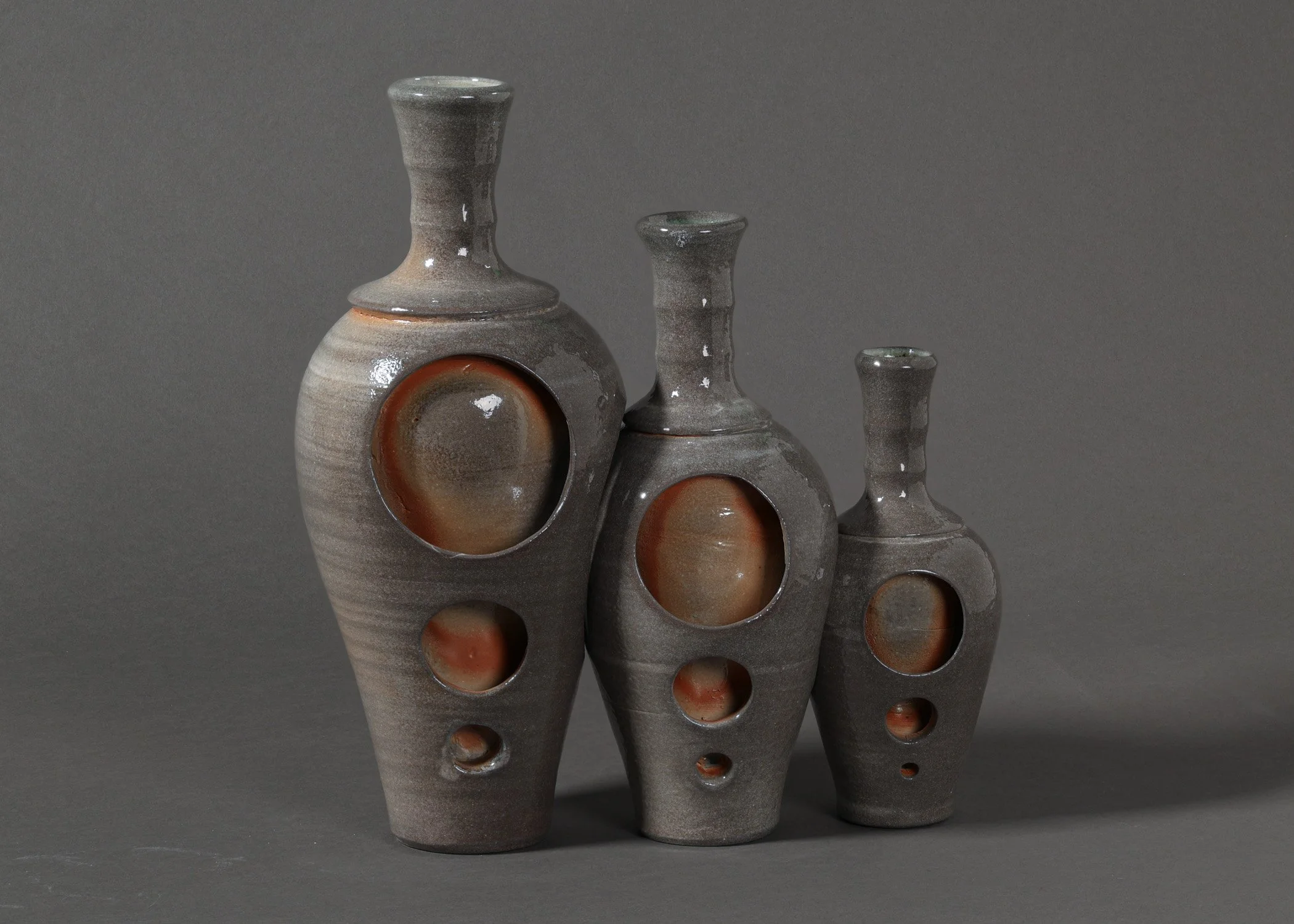
My work is an invitation to pause. It asks you to take a moment to think about what you’re holding, and why–though my pots are utilitarian in nature, a handmade teapot is far from the easiest way to drink tea, and my work asks where its value comes from. Each piece can and should be used, but I think of the visual and conceptual components of my work as valuable in themselves, beyond any functional enhancement.
Every piece begins on the wheel, thrown clay separating out an intentional volume in space. I then push, pull, cut, and alter this space, interrupting smooth lines to slow down the pace with which one’s eyes move over a piece. They are decorated with wild clay slips and glazes I create from clay, wood, and rocks I collect in Maine, each piece imbued with a sense of place–a connection to the land that shapes our lives and communities. I finish my work in a soda kiln, utilizing the draft of the kiln to determine my surface markings. Soda firing is a process whereby sodium carbonate is introduced at peak temperature, where it vaporizes and turns into a glaze wherever it touches pots. The draft of the kiln pulls this glaze through the stack of wares, sealing the path of the flame forever on each surface. I reduction cool after soda is introduced, darkening the color profile and adding texture and depth to the glaze surface. This atmospheric firing process informs much of my practice, providing a context in which I can problem solve and push my line of artistic inquiry without being overwhelmed by the infinity of possible choices I face as a young maker. Influenced by contemporary atmospheric firing artists, I incorporate heavy ash or soda glaze and dramatic flash marks to add a narrative to my surfaces, spending hours meticulously stacking my wares. Then, utilizing the draft of an atmospheric kiln like light through a camera lens, I create an absence, defining my surfaces based on where the flames can deposit glaze.
Raw clay is exposed when flame is blocked, each surface dictated by its context in the kiln. Many pieces are designed around this process–a ewer and its stand, or a teapot and its cups–each aspect working as negative or subject for its counterpart; a story only revealed when they’re separated. I often throw a double wall, carving through the outer layer of pieces to reveal a second wall for soda glaze accumulation. In this way, these pieces mark themselves in a process dictated by me but facilitated by the kiln. Picking up my ewer from its stand, one is left to look at its imprint and think about how each piece exists alone and what they bring to each other. The interactions that one might have with my work, whether physical, emotional, or cognitive, are what drive my practice forward.
